


Table of Contents
Everyone has opinions about what makes a great demo. We wanted data.
So we surveyed over 300 sales and presales professionals to find out what actually separates demos that close from demos that don’t. The result is our new Science of the Demo report — and some of the findings challenge conventional wisdom about how teams should be demoing in 2026.
Here are the seven best practices the data revealed.
1. Lead with Story, Not Features
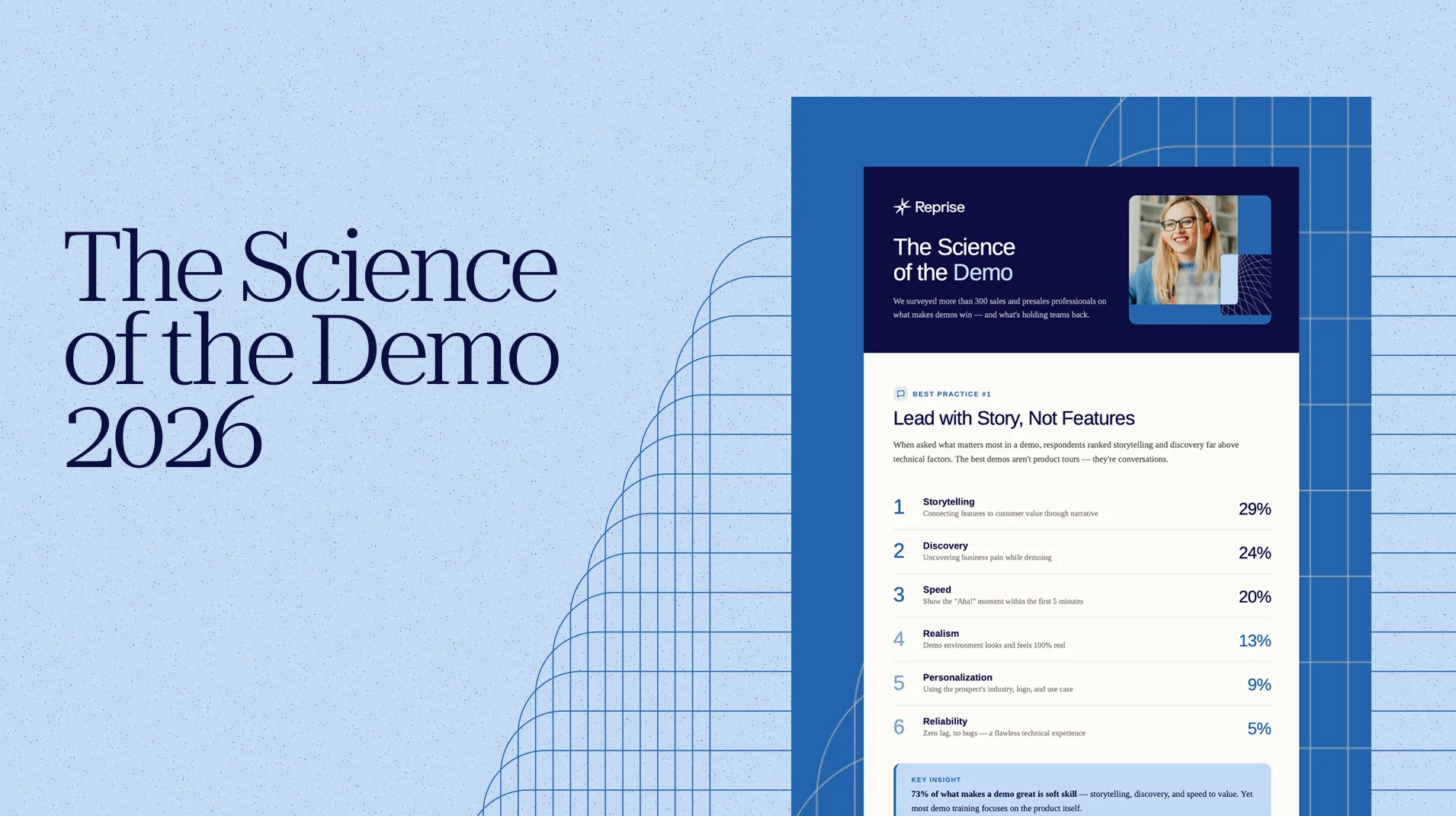
We asked respondents what matters most in a demo. The top answer wasn’t product knowledge. It wasn’t a polished environment. It was storytelling.
When we ranked every factor respondents cited, 73% of what makes a demo great comes down to soft skills: storytelling (29%), discovery (24%), and speed (20%). Technical factors like realism, personalization, and reliability made up the remaining 27%.
The takeaway is clear. The best demos aren’t product tours — they’re conversations. Teams that connect features to customer value through narrative consistently outperform teams that walk through a feature checklist.
This doesn’t mean product knowledge is irrelevant. You obviously need to know the product. But knowing the product and leading with the product are two different things.
2. Keep the Demo Under 60% of the Call
How long should your demo actually be? The data says shorter than most teams think.
68% of top-performing respondents keep their demo to 15 minutes or less — even on a 30-minute call. That means the best SEs are spending more time on discovery, questions, and conversation than they are on the actual walkthrough.
This tracks with best practice #1. If the best demos are conversations, then the demo itself is just one part of a larger dialogue. The teams that fill every minute with screen-sharing are leaving money on the table.
3. Embrace AI — Your Competitors Already Are
AI in demos isn’t a future trend. It’s a current reality.
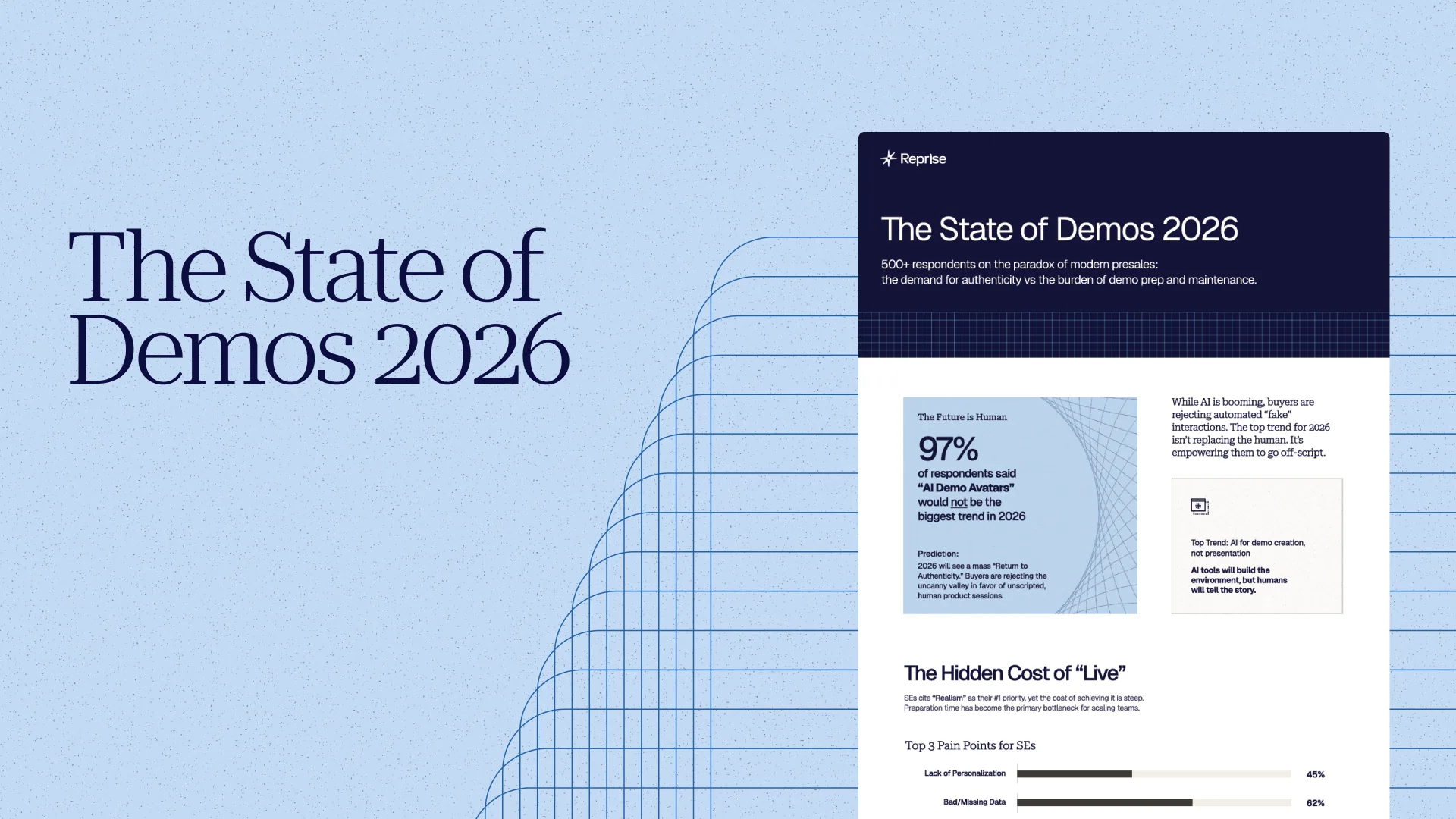
89% of sales and presales teams are already using AI somewhere in their demo workflow. Not to present — our State of Demos 2026 report made it clear that AI avatars are not what people want — but to build, prep, and maintain demos behind the scenes.
The teams that have embraced AI aren’t replacing the human element. They’re accelerating the work around it: generating demo data, configuring environments, personalizing content. If you’re still doing all of that manually, your competitors probably aren’t.
4. Personalize Every Demo to Accelerate Win Rates
Everyone knows personalization matters. But how much?
69% of respondents said personalization has a moderate-to-significant impact on their win rate. That’s not a nice-to-have — it’s a deal accelerator.
Personalization means more than swapping in a prospect’s logo. It means tailoring the demo environment to reflect their industry, their use case, and their data. It means showing them their world, not yours. The teams that invest in demo personalization are seeing it pay off directly in pipeline velocity and close rates.
5. Automate the Repetitive, Focus on the Human
Here’s the paradox: the things that make demos great (storytelling, discovery, reading the room) are deeply human. But SEs spend a disproportionate amount of time on things that aren’t — resetting environments, building data sets, managing demo infrastructure.
The best teams in our study are solving this by automating the repetitive backend work. They’re using technology to handle environment setup, data injection, and maintenance so their SEs can spend more time on the moments that actually move deals forward.
The humans should be doing the human work. Everything else should be automated.
6. Measure What Matters: Next Steps and Win Rate
When we asked teams what metrics they use to evaluate demo success, two stood out above the rest: next step conversion and win rate.
Not “time on screen.” Not “features covered.” The metrics that matter are about outcomes, not activity.
This is a maturity signal. Teams that measure demos by whether they generate a next step or contribute to a closed deal are thinking about demos as a revenue function. Teams that measure demos by how many they ran last quarter are thinking about demos as a task.
7. Enable Async Selling with Leave-Behind Demos
The demo doesn’t have to end when the call does.
48% of respondents already send leave-behind demos after their calls — interactive, self-guided versions of the demo that prospects can explore on their own time and share with their buying committee. But 52% still don’t, which means there’s a massive opportunity sitting on the table.
Leave-behind demos extend the life of every conversation. They let champions sell internally on your behalf. And they give you signal — who’s engaging, what they’re looking at, and how seriously they’re evaluating.
If you’re not sending something after the call, you’re relying entirely on your champion’s memory to sell for you.
The Bottom Line
The Science of the Demo makes one thing clear: the teams that win aren’t necessarily the ones with the best product or the most polished environment. They’re the ones that treat demos as a craft — blending soft skills with the right technology to create experiences that move deals forward.
The full report digs deeper into each of these seven best practices with more data, breakdowns, and actionable recommendations.